Tommy Löfstedt: Developing AI models to improve segmenting of medical images
Tommy Löfstedt, an associate professor and docent in computing science at Umeå University, is leading a group of eight people doing research in machine learning and computer vision. The application areas are wide-ranging but focusing mainly on projects related to medical imaging, life sciences, and software security.
One current project funded by the Swedish Childhood Cancer Fund is about improving automatic segmenting of medical images for children. There are already segmentation models that perform well on adults, but much less so on children.
“There is a scarcity of quality medical images of children, partly and luckily because a low number of children have cancer. Children’s images are different in their noise distribution and anatomy, but children also may not lie still during the scanning, which produces motion artefacts. And so the resulting images are more difficult to segment,” Tommy Löfstedt explains.
“We are making progress”
His group is trying to address the problem by developing AI models which handle these differences.
“The goal of the project is to improve the segmenting results for children without sacrificing the quality for adults. And we can see that we are making progress.”
Another project he is involved in which is launching soon is about analysing Android software to find harmful code, with funding from WASP (Wallenberg AI, Autonomous Systems and Software Program).
“One node per model is sufficient”
Tommy Löfstedt has a Medium allocation on the GPU-based NAISS system Alvis, but admits they have occasionally been hitting the ceiling.
“It hasn’t been a huge problem so far – we have been able to keep running anyway. But I’ve been thinking that maybe it’s time for us to apply for a Large allocation.”
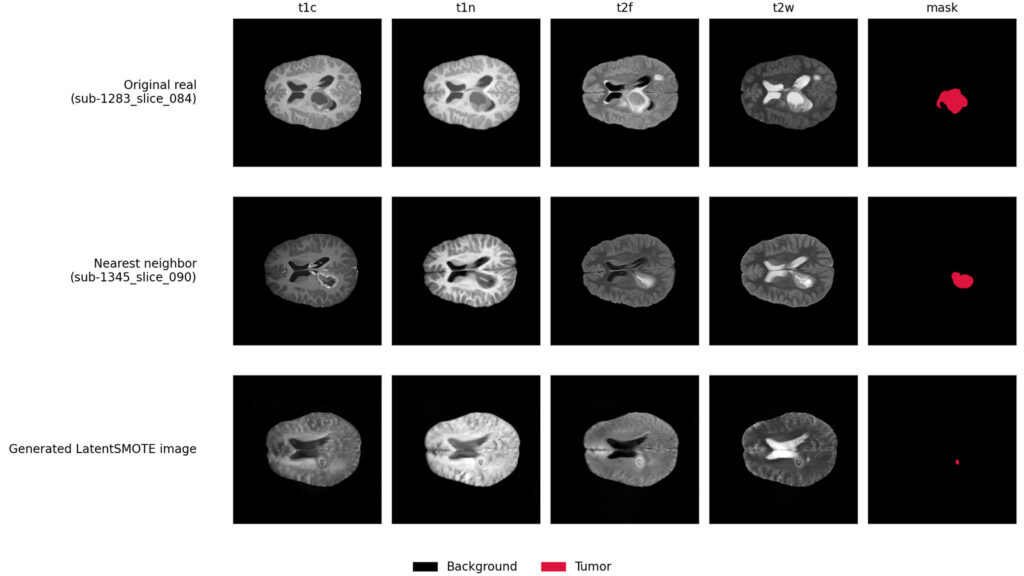
The process his team is using involves training the same model over and over, with different settings, to determine which settings work best.
“We may end up training 10,000 models or more. I would say that these models today are medium-sized. They for sure don’t require hundreds of GPUs. Generally, one node per model is sufficient,” Tommy Löfstedt says.
Tricky to predict future needs
He and his team rarely encounter problems – they have a set-up that works and usually manage the processing all on their own. Should they ever need a special version of a particular software, NAISS’s support is quick to assist. But he wishes that it would be easier to scale usage on existing allocations.
“You apply for Medium and Large resources for one year at a time, and it is sort of a guessing game. You never know how many of the project grants you apply for will be approved, and so it is pretty hard to know in advance what kind of resources you will be needing in six months’ time.”
“If there was a way to adjust it continually, it would be great.”